 EN
 Deutsch
 Español
 Français
 Português
 Română
How to Start a Gratitude Journal (and Actually Keep It)
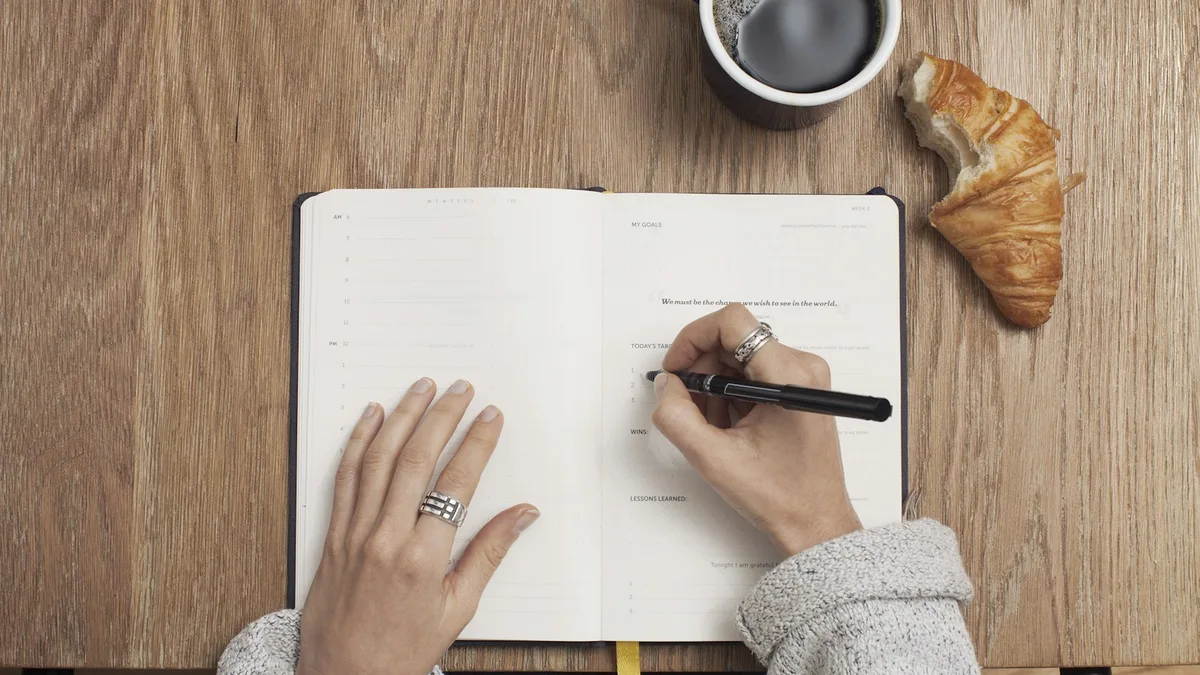
Here’s how to start a gratitude journal: write down one to three specific good things from your day, at the same time every day, in one place you’ll come back to. That’s it. The rest of this guide is about making it easy enough that you’re still doing it after the first week.
What is a gratitude journal?
A gratitude journal is where you write down things you’re thankful for. It can be a notebook, a note on your phone or an app made for it. Entries are quick notes about good moments: the coffee was perfect, your sister called, the bus showed up on time.
You don’t have to pretend everything is fine. The point is to train your attention: it’s easy to notice what went wrong without even trying, but noticing what went right takes a little practice.
Why writing it down helps
Researchers in positive psychology have looked at gratitude journaling a lot. Here’s what three well-known studies found:
- In a 10-week study by Robert Emmons and Michael McCullough, people who wrote down a few things they were grateful for each week felt better about their lives as a whole and were more optimistic about the week ahead than people who wrote about hassles or neutral events.
- In the “three good things” exercise tested by Martin Seligman and colleagues, people wrote down three things that went well each day for one week, plus why they happened. They reported more happiness and fewer depressive symptoms for up to six months.
- Sonja Lyubomirsky and colleagues found that how often you do it matters. In one study, people who counted their blessings once a week ended up happier, while people who did it three times a week didn’t, possibly because they got bored with it.
How to start a gratitude journal in five steps
1. Pick one place
Choose where your entries will live and stick with it: a small notebook by your bed, a note on your phone or an app. Entries spread across different places are hard to look back on, and looking back is half the fun.
2. Tie it to something you already do
New habits stick better when you piggyback them on old ones. Write your entry right after you brush your teeth at night, while your coffee is brewing or when you get into bed. What you tie it to matters more than the exact time.
3. Keep it tiny
Aim for one good thing, written in one or two sentences. If you feel like writing more, great. But the minimum should be so small that you can do it on your worst day.
4. Be specific
“I’m grateful for my family” gets old fast. “My dad sent me a photo of the dog sleeping on my old bed” doesn’t. Specific entries are more fun to write and a lot better to reread months later.
5. Look back once in a while
Every week or month, read back through your old entries. On a rough day, a page full of small good things reminds you that life is better than it feels right now.
Examples of what to write
Detail is usually what keeps an entry from feeling like homework. Compare:
| Too general | Specific |
|---|---|
| I’m grateful for my friends | Maya laughed so hard at my story that tea came out of her nose |
| Good weather | Ate lunch outside in the sun for the first time this month |
| My job | My manager said my presentation was the clearest one this week |
| Food | Tried the new ramen place with Alex and the broth was unreal |
| My home | Fresh sheets, open window, rain outside |
You can also add why it happened, as in the “three good things” exercise: “Maya laughed at my story because I finally told it without rushing.” Writing down the why helps you see the part you played in your good moments.
Prompts for slow days
Some days nothing comes to mind. These questions can help:
- What made you smile today, even for a second?
- Who made your day a little easier?
- What’s something you used today that you’d miss if it were gone?
- What did you eat or drink that was really good?
- What went better than you expected?
- What’s one thing your body did for you today?
- What made you laugh this week?
- What’s something you’re looking forward to?
- What did you learn today?
- What’s one small thing that’s going right, even if the big things aren’t?
How to keep the habit going
The first week is easy. The hard part comes a few weeks in, when the novelty wears off and a lot of journals end up in a drawer. Here’s what helps:
- Lower the bar on bad days. Even one word counts, like “Shower.”
- Set a reminder. Time it for right after the thing you tied the habit to, like brushing your teeth.
- Track your streak. Seeing how many days in a row you’ve shown up is surprisingly motivating. If you miss a day, just start again tomorrow. A broken streak isn’t a big deal.
- Share with someone. Telling a partner or friend one good thing that happened today makes the habit social, and it might cheer them up too.
- Make looking back a ritual. Pick a day, like the first of the month, to read everything from the month before.
Paper or app?
Paper is lovely if you already like writing by hand. The downside is that the notebook isn’t always with you, and nothing reminds you to write.
An app solves both. We built Graceup so this habit takes about 30 seconds a day. It asks you one question each day, tracks your streak, drops each moment into a jar that opens at the end of the month and lets you share good moments with a small group of friends. The daily journal is free, and you can see what Premium adds if you want more.
Whichever you pick, the method doesn’t change: write down one good thing a day. You can start tonight with the first thing that made you smile today.
Frequently asked questions
How long should a gratitude journal entry be?
One to three sentences is plenty, and it usually takes less than a minute. Keeping it short makes it much easier to do every day.
Do I have to write every day?
No. In one study, people who wrote down what they were grateful for once a week ended up happier, while people who did it three times a week didn't. Pick a rhythm you can keep. Some people find a small daily entry easier to remember than a weekly one.
What do I write on a bad day?
Write down something small and real, like a hot shower, a text from a friend or just the fact that the day is over. You don't have to feel grateful for the whole day, just for one good minute of it.
Is a gratitude journal better on paper or in an app?
Both work. Paper feels more personal and makes you slow down. An app is always in your pocket, can remind you at the right time and keeps everything searchable. Go with the one you'll actually open.
When is the best time to write in a gratitude journal?
Whenever you're most likely to remember. Many people write in the evening so they can end the day on a good note. Others prefer the morning over coffee. Tie it to something you already do every day so you don't have to think about it.
How long until I notice a difference?
The exercises in the studies linked here ran anywhere from one week (the "three good things" exercise) to ten weeks (Emmons and McCullough), so there's no set timeline. One of the first changes you may notice is small: you start catching good moments during the day because you know you'll write them down later. Give it at least two weeks before you decide whether it works for you.
Is it okay to write the same thing more than once?
Yes. Just try to add something new each time. Instead of writing "my family" again, write what your brother said at dinner. Details keep the habit fresh and make old entries more fun to reread.

Eric Cosulea is the founder of Graceup, a gratitude journal app. He writes about gratitude and happiness, with a focus on small daily habits that are easy to keep and help people notice the good parts of ordinary days.